2026-10-24 ·
How to Check Attic Insulation Levels Before Winter in American Fork
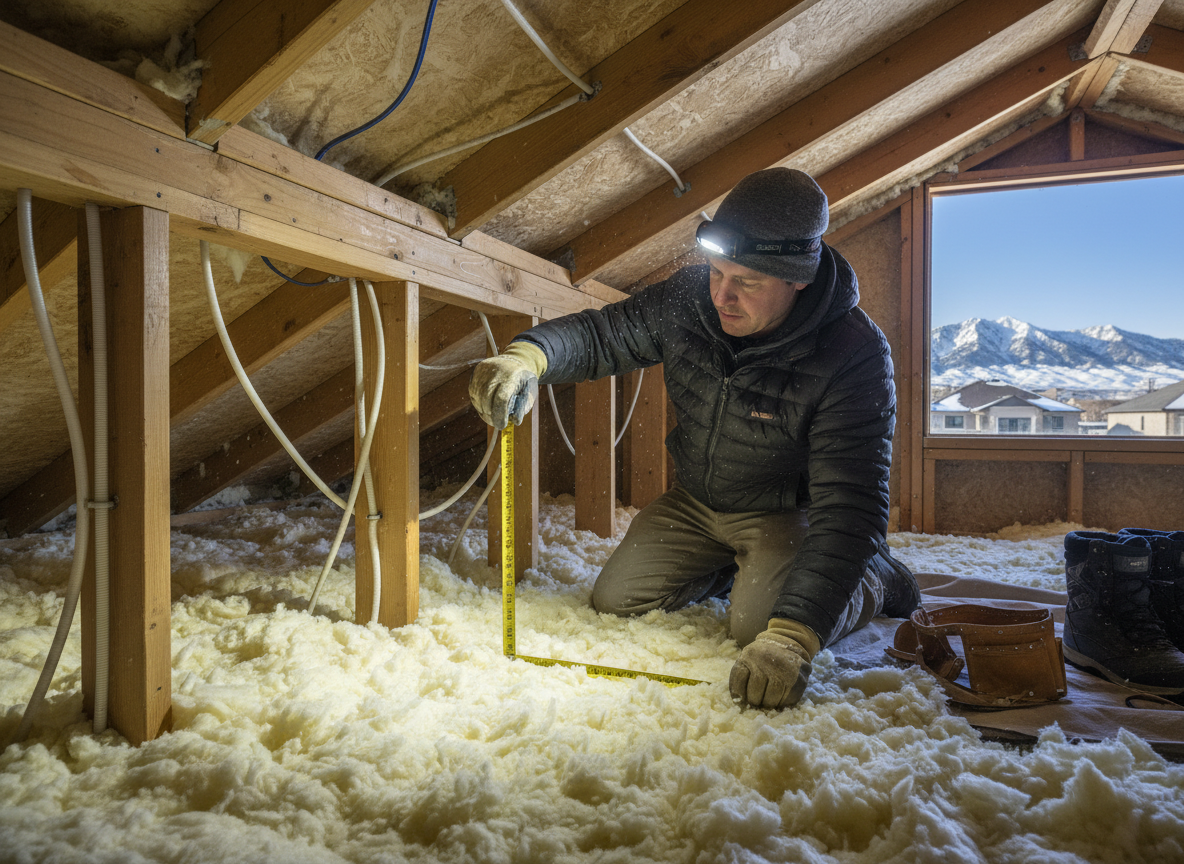
To check attic insulation levels before winter in American Fork, safely access the space through an interior hatch or exterior gable vent and measure material depth at multiple points while noting any gaps or compression. Homes built before 1980 in Downtown American Fork and North American Fork often show settled or thin layers that allow heat loss once temperatures drop in the semi-arid climate. Walk only on joists to avoid damaging ceiling drywall below, and use a bright flashlight to inspect near the eaves and around penetrations such as recessed lights or plumbing vents. This initial walkthrough reveals whether existing material still meets performance needs for the cold winters typical in Utah County.
Preparing Your Attic Access and Safety Setup
Gather a tape measure, notepad, headlamp, dust mask rated N95, and knee pads before climbing into the attic. Turn off power to any ceiling fixtures from the breaker panel to reduce shock risk during inspection. Clear a path on the attic floor by moving stored boxes aside, which also lets you check whether items are compressing the insulation and reducing its effectiveness. In South American Fork homes with steeper roof pitches near American Fork Canyon, watch for low headroom and loose wires. Schedule the check during mild afternoon hours when attic temperatures stay manageable even in late fall. These steps prevent injuries and give an accurate view of conditions shaped by decades of seasonal expansion and contraction.
Measuring Depth and Spotting Problem Areas
Record insulation depth every four to six feet across the main attic floor and along perimeter joists, noting the dominant material type such as loose-fill or batts. Gaps around chimneys, bathroom fans, and electrical boxes commonly appear in American Fork homes and allow cold air infiltration once winter sets in. Look for signs of moisture staining or rodent tunnels that compress material and lower performance, especially in older properties near American Fork City Hall. Compare readings from the center of the attic to the eaves where wind-driven snow can enter through soffit vents. Consistent measurements above joist height indicate better protection against the sharp temperature swings between hot summers and freezing nights. Document everything with photos for later reference or discussions with local contractors.
Evaluating Performance Against Local Winter Demands
American Fork's cold winters and semi-arid conditions mean insulation must block both heat escape and moisture migration from indoor air. Check whether material appears uniformly distributed or has shifted due to vibration from nearby traffic along Main Street. Homes in Highland and Pleasant Grove often share similar framing that leaves narrow cavities prone to incomplete coverage. Note any areas where insulation has been disturbed by past HVAC work or cable installation. Consistent shortfalls near Timpanogos Cave area properties frequently trace to original construction practices that prioritized minimal material. This evaluation shows exactly where upgrades would address the biggest heat-loss paths before the first hard freeze arrives.
Planning Follow-Up Actions Based on Findings
If measurements reveal thin spots or widespread gaps, consider blown-in insulation options that fill irregular cavities without major demolition. Review the typical materials used for attic insulation in American Fork homes to match new material with existing types. Pair any upgrade with ventilation improvements detailed in ways to improve attic ventilation alongside insulation in Utah County. Residents in Lehi facing similar stock can reference the same process. Contact Warmvale Company at 51 E Main St, American Fork, UT 84003 for a 24/7 consultation if findings indicate immediate attention is needed before winter arrives.