2026-10-24 ·
What Affects Attic Insulation Performance During Utah Inversion Season
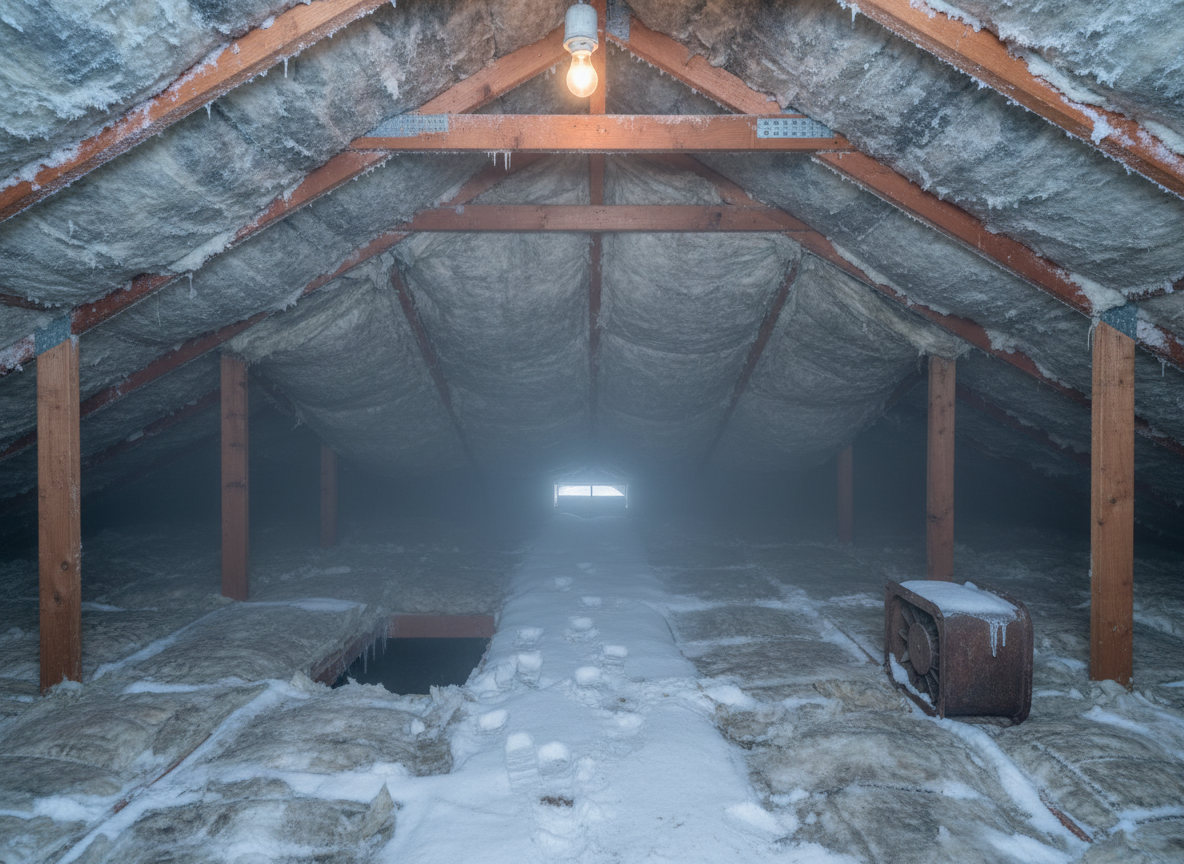
Utah inversion season raises attic heat loss by 15-25% in American Fork homes because cold air pools in the valley and presses against roof decks for days at a time.
Cold Air Pooling in American Fork Valleys
Inversion layers form when warmer air sits above the colder ground air trapped by the Wasatch Range. Homes in Downtown American Fork and South American Fork sit lower in the basin, so their attics experience prolonged sub-freezing temperatures even when daytime highs reach the mid-30s. Older single-story houses built before 1990 often have only 6-8 inches of existing material, allowing rapid heat escape once the inversion locks in. Newer builds in North American Fork hold heat better but still lose efficiency when the temperature differential between attic and living space widens for five or more consecutive days. Terrain near American Fork Canyon funnels colder air down slopes at night, creating micro-pockets where insulation must resist both conduction and convection.
Homeowners notice higher furnace runtime once inversions settle in because the attic becomes the primary escape path for heated air. Checking for drafts around recessed lights and attic hatches reveals where performance drops first.
Moisture and Condensation Risks During Stagnant Air
Stagnant inversion air holds more relative humidity than typical winter winds allow. Warm indoor moisture rises into attics and meets the colder roof deck, forming condensation on sheathing and rafters. In Pleasant Grove and Highland homes with similar valley exposure, this leads to frost on nails and reduced R-value in fiberglass batts once they absorb even small amounts of water. Cellulose settles faster under repeated freeze-thaw cycles common along the American Fork River corridor. Proper vapor retarders and sealed penetrations limit moisture drive, yet many pre-2000 homes lack these details. During multi-day inversions, attic temperatures can swing 30 degrees between day and night, accelerating the cycle.
Inspecting for ice dams along eaves after inversion periods shows where warm air leakage is melting snow unevenly. Addressing these leaks before the next cold snap preserves insulation integrity.
Ventilation Limitations in Local Housing Stock
Many American Fork homes rely on passive ridge and soffit vents that become less effective when inversion winds drop below 5 mph. Blocked soffits from insulation settling or debris reduce airflow exactly when it is needed most. Ways to Improve Attic Ventilation Alongside Insulation in Utah County outlines steps that restore balance without adding mechanical fans in every case. Homes near Timpanogos Cave and higher canyon edges receive slightly more natural airflow, while valley-floor neighborhoods require deliberate intake paths. Blown-in materials can block vents if installers do not maintain clearance, cutting effective ventilation by half.
Regular checks after heavy snow events prevent vent blockage that compounds inversion problems.
Material Choices for Inversion Conditions
Closed-cell spray foam maintains consistent R-value when attic temperatures stay below freezing for extended periods, unlike loose-fill that can compact. Typical Materials Used for Attic Insulation in American Fork Homes compares performance across local climate swings. Fiberglass batts work in newer construction with proper baffles, yet older Downtown American Fork attics often need removal and replacement to reach current standards. Rockwool resists moisture absorption better during condensation events common in Lehi and Pleasant Grove valleys.