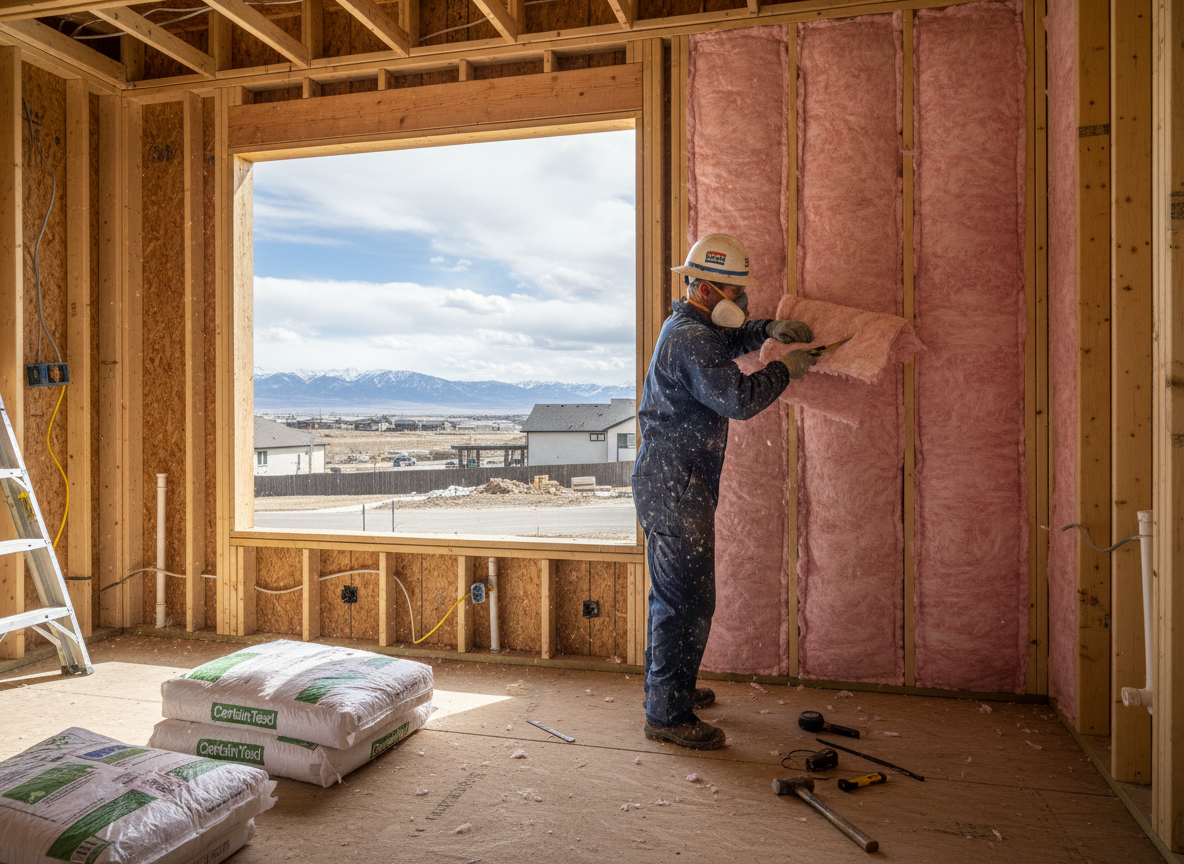
Fiberglass insulation works well in American Fork attics because the semi-arid climate brings wide temperature swings between hot summer days and freezing winter nights. Homes in Downtown American Fork and older stock near American Fork City Hall often have limited attic access and existing batts that have settled or compressed over time. Proper R-value selection and full coverage around trusses and recessed lights prevents condensation issues that can appear even in dry Utah air when warm interior moisture meets cold roof decks.
Installers working North American Fork and South American Fork neighborhoods routinely deal with vaulted ceilings and limited knee-wall spaces common in homes built near Timpanogos Cave access roads. Fiberglass batts must be cut precisely to avoid compression at electrical runs and HVAC ducts, while blown-in options fill irregular cavities better in American Fork Canyon area homes exposed to canyon winds. Vapor retarders are rarely needed here, but sealing attic bypasses remains critical to stop heat loss during the long winter heating season.
Technicians from Lehi, Pleasant Grove, and Highland routinely cross into American Fork for jobs because the same cold-weather performance demands apply across the region. Fiberglass requires careful handling around knob-and-tube wiring still found in some pre-1960 homes near American Fork Canyon, and installers always verify that soffit vents remain clear to maintain airflow under the roof deck during summer heat.
Handling Common Fiberglass Challenges in Utah Attics
Local crews check for rodent damage in South American Fork attics before laying new fiberglass because existing insulation often masks nests that reduce effectiveness. Proper personal protection is mandatory when disturbing old material, and all work follows current Utah energy code requirements for attic ventilation.
Technician insight
In American Fork, the thing that catches most people out with fiberglass insulation is older homes near American Fork Canyon that still have active knob-and-tube wiring. Homeowners often want to pile on thick batts without realizing the wiring needs to stay exposed for heat dissipation, and skipping that step creates a real fire risk during the cold winter months.
Downtown American Fork Attic Refresh
A homeowner in Downtown American Fork noticed high winter heating bills and uneven temperatures on the second floor. Inspection revealed compressed fiberglass from the 1980s plus several unsealed penetrations around bathroom fans. Crew removed the old material, sealed the bypasses, and installed fresh unfaced batts to the proper depth while keeping soffit vents clear. The home now maintains steadier temperatures through both hot summer days and freezing nights.
How it works
- 1
Site Inspection
Technician measures attic depth, checks existing insulation condition, and notes ventilation paths in homes across Downtown American Fork and nearby neighborhoods.
- 2
Material Selection
Choose appropriate fiberglass batts or loose-fill based on ceiling joist spacing and any obstructions found in North or South American Fork properties.
- 3
Preparation
Clear access, protect electrical fixtures, and seal gaps around pipes and wires before installation begins.
- 4
Installation
Lay or blow fiberglass to uniform depth, ensuring full coverage without compressing material around trusses or ducts.
- 5
Final Check
Verify ventilation remains open and provide homeowner with a walkthrough of the completed work.
Pricing
Upfront quotes provided after on-site inspection; final cost depends on attic size, access difficulty, and existing insulation condition.