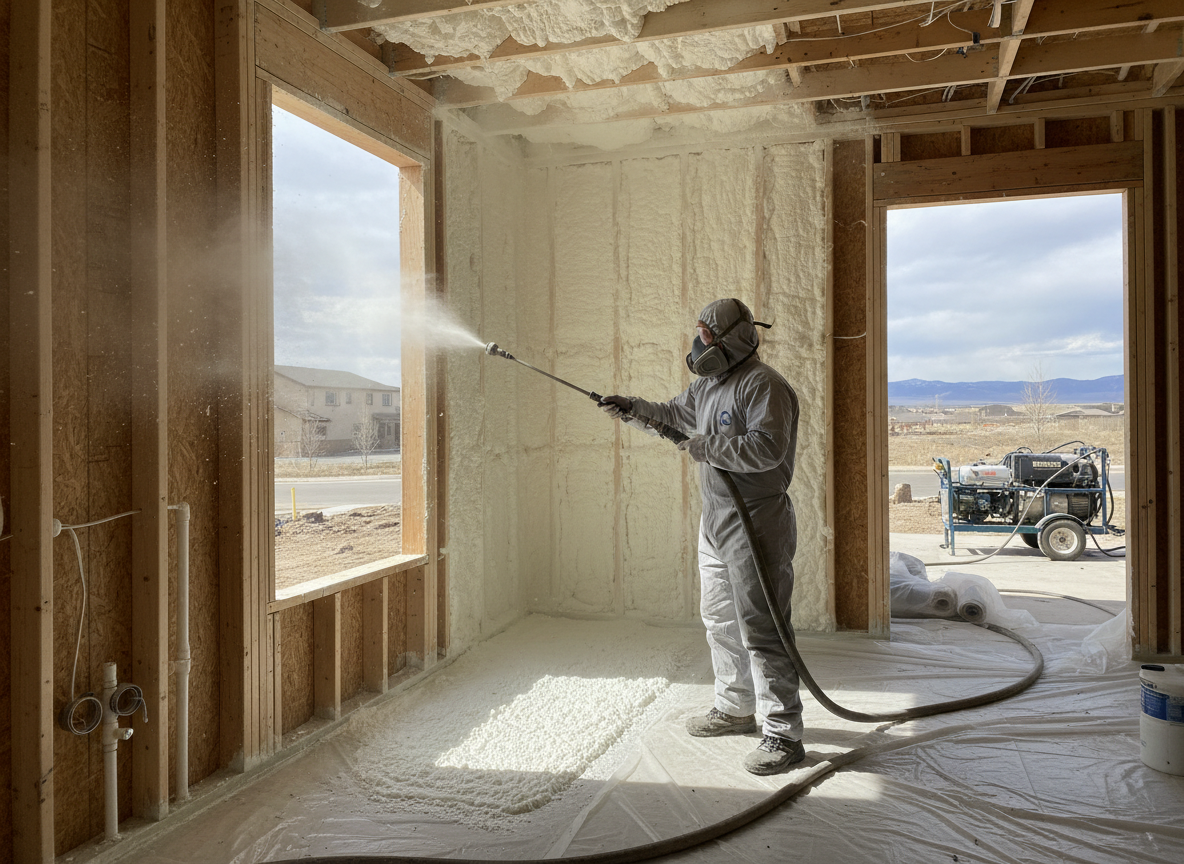
Foam board insulation in American Fork attics must account for the semi-arid climate where summer highs push heat downward through older roof decks while winter lows in the American Fork Canyon area demand consistent thermal resistance. Rigid polystyrene or polyisocyanurate boards are cut to fit between rafters or laid across attic floors in homes built before 1980 in Downtown American Fork and South American Fork, where joist spacing often varies and existing fiberglass has settled. Proper taping of seams prevents air leakage that would otherwise bypass the board edges during the rapid temperature drops common near Timpanogos Cave.
Edge cases appear in North American Fork properties near American Fork City Hall where low-slope roofs and limited headroom require thinner 1-inch boards scored and layered rather than full 2-inch sheets. Soil movement from the nearby Utah Lake basin can shift foundation walls slightly, so installers leave expansion gaps at perimeter walls instead of butting boards tight. In Highland and Pleasant Grove homes with vaulted ceilings extending into the attic, foam board is furred out with strapping to maintain ventilation channels required by local building practices.
Homeowners sometimes attempt DIY installation using big-box boards without accounting for the high winds that funnel through American Fork Canyon, which can dislodge unsecured panels before they are fastened. Code notes in Utah emphasize maintaining attic ventilation even when adding continuous layers, so ridge and soffit paths must remain clear. We inspect for knob-and-tube wiring and recessed lights before any board placement to avoid heat buildup in South American Fork residences.
Technician insight
In American Fork, the thing that catches most people out with foam board insulation is the wind that funnels down American Fork Canyon and lifts unsecured panels before they are fastened; older homes in Downtown American Fork also have irregular joist spacing that forces more on-site cutting than newer builds in Lehi.
South American Fork Attic Upgrade
Homeowner called after noticing uneven heating in winter. We found settled fiberglass and blocked soffits in a 1970s ranch. Cut and layered 2-inch polyisocyanurate boards across the floor joists while keeping ridge ventilation open. Temperature consistency improved and no further drafts reported.
How it works
- 1
Site Assessment
Measure attic dimensions, note joist spacing, and check existing ventilation in American Fork homes.
- 2
Material Preparation
Cut rigid foam boards to fit rafters or floor joists while preserving airflow paths.
- 3
Board Installation
Secure panels with mechanical fasteners and tape all seams for air sealing.
- 4
Final Sealing and Cleanup
Apply perimeter sealant and remove debris before leaving the site.
Pricing
Pricing varies by attic size, access difficulty, and number of layers required; upfront quotes given after inspection.