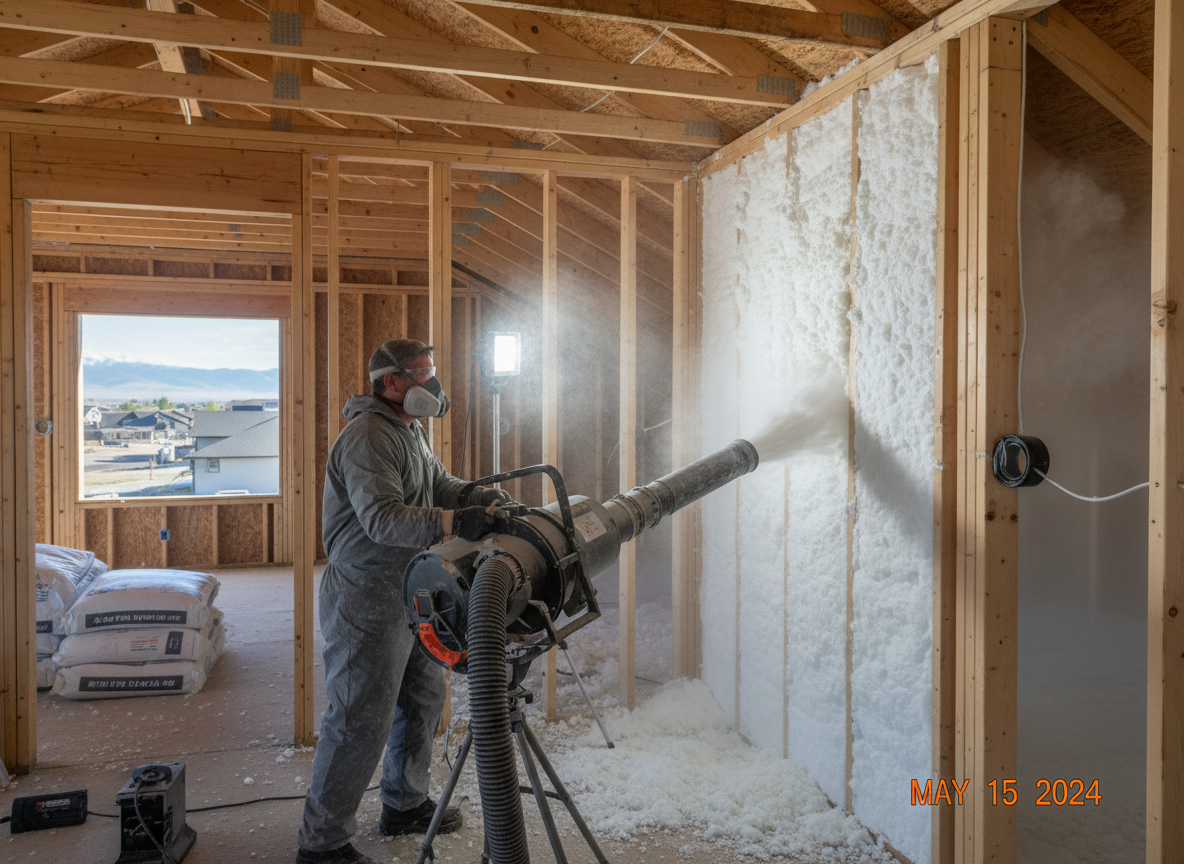
Blown in insulation works well in American Fork because many homes built before the 1990s in Downtown American Fork and South American Fork have irregular joist spacing and existing batts that have settled. Cellulose or fiberglass is fed through a hose to reach full depth without tearing out ceilings. In the semi-arid climate, summer heat drives attic temperatures over 130 degrees while winter lows drop below freezing, so the material must block both heat gain and loss without trapping moisture that can occur near the American Fork Canyon area where temperature swings are sharper.
Technicians check for recessed lights, bathroom fans, and chimney chases before blowing because these are common ignition or airflow points in Pleasant Grove and Highland homes that border American Fork. Overfilling near eaves blocks soffit vents and creates ice dams when snow melts on the roof during the cold season. Proper baffles and a 2-inch gap are left along the perimeter so air still moves, which matters on the north-facing slopes common in North American Fork where shade keeps attics cooler longer in spring.
Utah energy code requires minimum R-49 in attics for this zone. We measure existing depth first because adding only a few inches on top of old material often fails to meet code and leaves cold spots above the living space. Homeowners in the American Fork City Hall vicinity sometimes discover knob-and-tube wiring during prep; that must be addressed before any cellulose is added because the material can hold moisture against the wires.
Technician insight
In American Fork, the thing that catches most people out with blown in insulation is the settled material in pre-1980 homes along Main Street and in South American Fork. Those attics look full from above but leave only R-19 or less once you dig in, and the cold winters here make the difference obvious on heating bills.
South American Fork Attic Top-Off
Homeowner called after noticing uneven heating in winter. We found 4 inches of settled cellulose over knob-and-tube wiring in a 1960s ranch. Baffles were added along the eaves, new cellulose was blown to R-49, and wiring was flagged for an electrician. The family reported steadier indoor temperatures the following month.
How it works
- 1
Attic Assessment
We inspect from 51 E Main St jobsites across American Fork to measure current insulation depth, locate air leaks, and check for wiring or venting issues before any material is ordered.
- 2
Vent and Baffle Setup
Soffit baffles are installed or repaired to keep intake air flowing, especially important on homes near Timpanogos Cave where canyon winds push more air through the eaves.
- 3
Material Blowing
Cellulose or fiberglass is blown to the required R-value using a truck-mounted machine parked on the street so hoses reach even tight access points in older Downtown American Fork homes.
- 4
Final Check and Cleanup
Depth is verified at multiple points, vents are confirmed clear, and all debris is removed before we leave the property.
Pricing
Upfront quotes after on-site inspection; cost varies by attic size, existing insulation condition, and access difficulty.