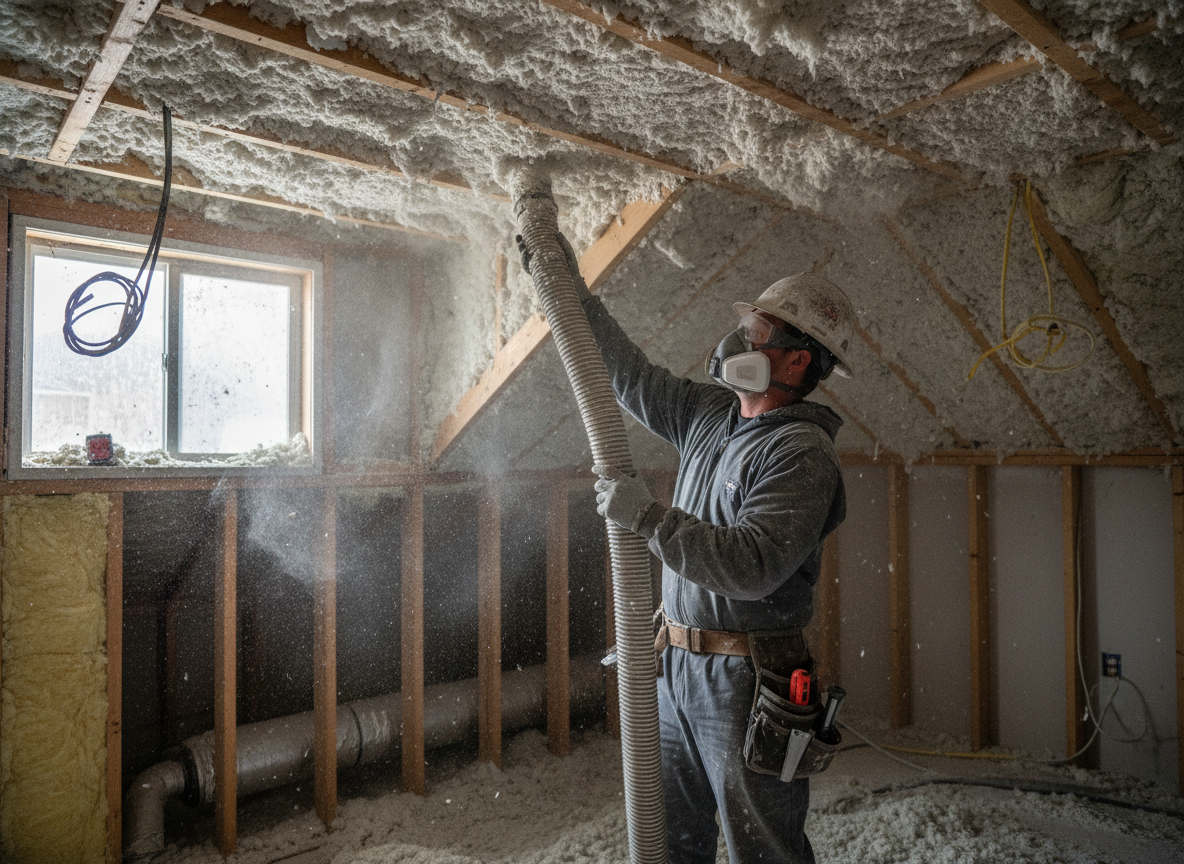
American Fork homes built before the 1980s in Downtown American Fork and near American Fork City Hall often have shallow ceiling cavities and older wiring that require careful material selection. Blown-in cellulose or fiberglass batts must be installed without disturbing knob-and-tube lines while maintaining proper ventilation to prevent moisture buildup during cold winter nights. Homeowners in South American Fork and the American Fork Canyon area face additional wind-driven heat loss that standard R-values do not always address.
The semi-arid climate brings rapid temperature swings between hot summer days and freezing nights, making air sealing around recessed lights and attic hatches critical before adding insulation. In neighborhoods bordering Lehi and Pleasant Grove, newer tract homes still suffer from compressed insulation in vaulted ceilings that reduces performance. Proper depth measurement and baffles at eaves keep airflow moving and protect against ice dams that form along the canyon corridor.
Highland and Pleasant Grove residents frequently request ceiling insulation upgrades when converting bonus rooms above garages. These spaces sit directly under unconditioned attics and need targeted dense-pack cellulose to reach code minimums without raising ceiling height. Edge cases include cathedral ceilings near Timpanogos Cave recreation areas where roof pitch limits access and requires removing sections of soffit for proper installation.
Technician insight
In American Fork the thing that catches most people out with ceiling insulation is the shallow joist bays in pre-1970 homes around Downtown and near City Hall. Those tight spaces fill fast with blown material but leave no room for proper baffles, so wind from the canyon pushes cold air right back under the insulation during winter.
South American Fork Ranch Home
Homeowner noticed uneven heating in winter months. Inspection revealed compressed fiberglass in the ceiling above the living room with no baffles at the eaves. We removed the old material, sealed gaps around can lights, and installed new cellulose to consistent depth with added baffles. The home now maintains steady temperatures without extra furnace runtime.
How it works
- 1
Initial Assessment
Technician inspects ceiling cavities, wiring, and ventilation in American Fork homes to identify access points and material compatibility.
- 2
Air Sealing
All gaps around lights, vents, and penetrations are sealed before insulation is added to prevent air movement in the semi-arid climate.
- 3
Material Installation
Blown cellulose or batts are placed to uniform depth while maintaining required clearance around fixtures and ensuring proper baffles at eaves.
- 4
Final Verification
Depth and coverage are checked, attic access is restored, and the homeowner receives a walkthrough of the completed work.
Pricing
Cost depends on square footage, access difficulty, and chosen material; older Downtown American Fork homes often require extra prep work.