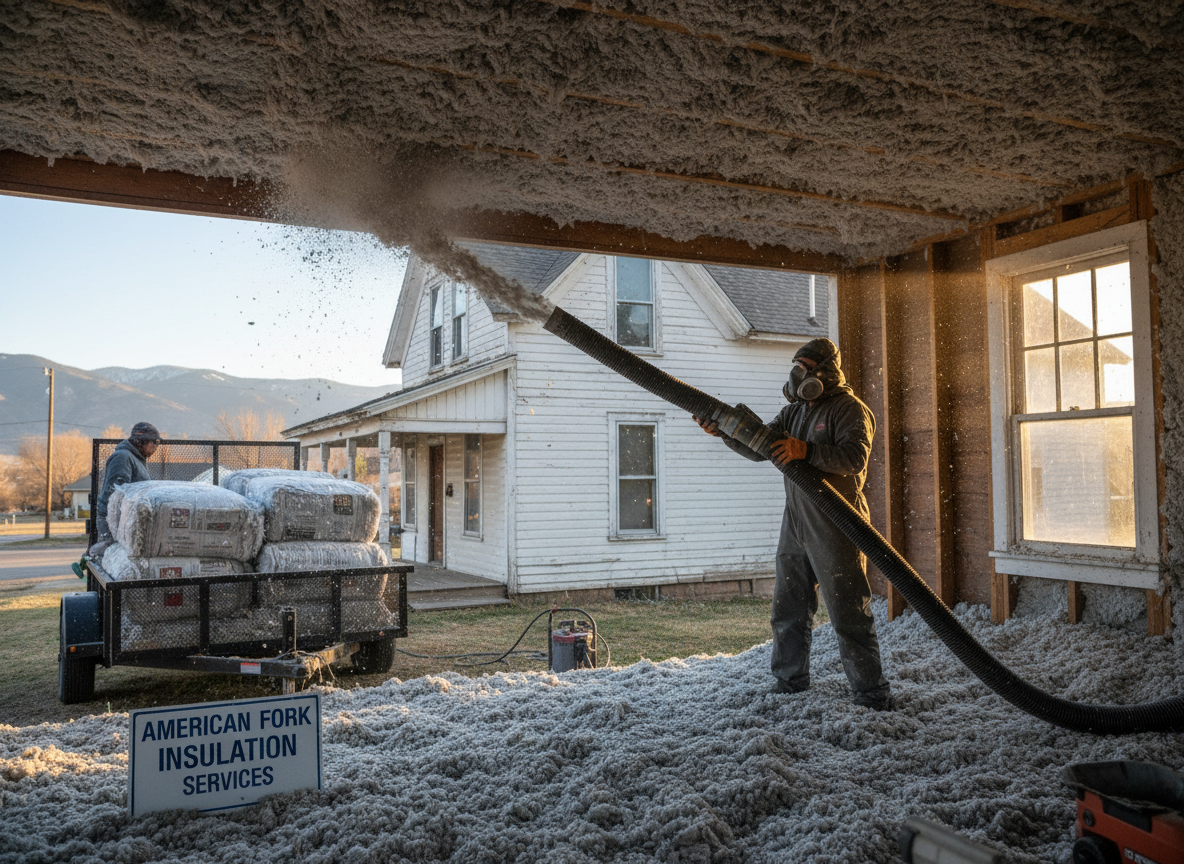
Cellulose insulation is blown into attics using dense-pack methods that fill gaps around existing trusses and wiring common in American Fork homes built before 1990. In the semi-arid climate, it manages heat gain during hot summers while adding thermal mass that slows heat loss once winter temperatures drop below freezing. Installers must check for proper roof deck ventilation near American Fork Canyon where snow loads can trap moisture if airflow is blocked. Older homes in South American Fork often have knob-and-tube wiring that requires protective barriers before cellulose is added to avoid fire risks.
Access through small attic hatches in North American Fork ranch houses frequently limits equipment size, so crews use smaller hoses and staged delivery from the truck parked on Main Street. Soil conditions in the area are dry and stable, reducing the chance of foundation moisture migrating upward, yet occasional monsoon rains can introduce water through roof leaks that must be fixed before insulation begins. Crews also verify that recessed lights are IC-rated or boxed off to meet Utah energy codes.
Highland and Pleasant Grove commuters often request cellulose because it settles less than fiberglass over time in homes with cathedral ceilings common along the canyon corridor. Proper moisture barriers and baffles are installed at the eaves to maintain the required R-value through seasonal temperature swings. Homeowners in Downtown American Fork appreciate that cellulose can be added without removing existing batts when the original material is still dry and intact.
Technician insight
In American Fork, the thing that catches most people out with cellulose insulation is older homes near American Fork City Hall that have single-pane windows and minimal roof overhangs; the cellulose performs well but the whole-house heat loss stays high until those windows are addressed too.
South American Fork Attic Upgrade
Homeowner noticed high summer cooling bills in a 1970s ranch. We found compressed fiberglass and blocked soffit vents from prior storage. Crew removed debris, added baffles, and blew cellulose to uniform depth. Energy use dropped noticeably the following winter.
How it works
- 1
Attic Assessment
Inspect existing insulation, ventilation, and wiring in American Fork attics to identify moisture issues or code gaps.
- 2
Preparation
Seal air leaks, install baffles, and protect fixtures before cellulose is blown in.
- 3
Material Delivery
Truck delivers cellulose to 51 E Main St address then hoses it into the attic space.
- 4
Final Check
Verify coverage depth and ventilation remain clear after installation.
Pricing
Cost depends on attic size, access difficulty, and whether existing insulation must be removed in American Fork homes.