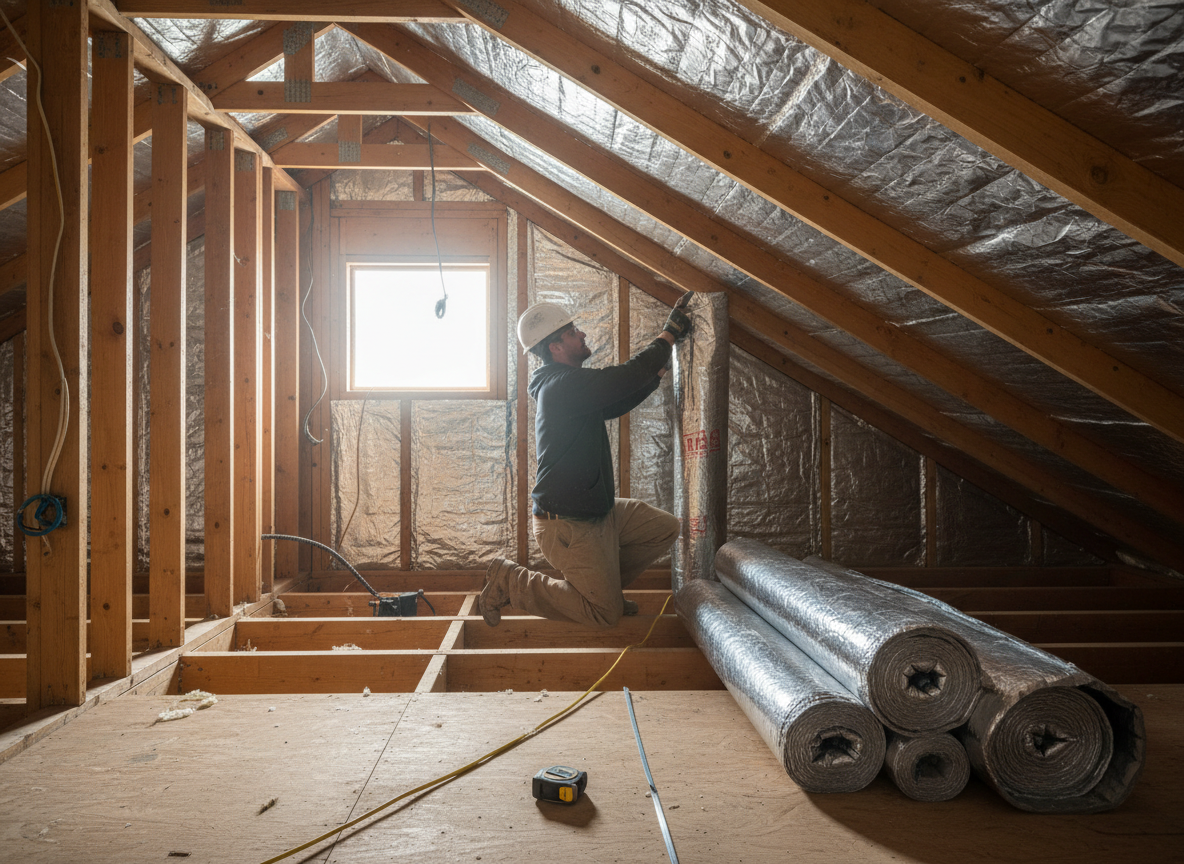
Double bubble insulation consists of two layers of polyethylene bubbles sandwiched between reflective foil faces. This material blocks radiant heat transfer rather than absorbing it, making it effective in Utah's semi-arid climate where summer temperatures climb quickly and winter nights drop sharply. Installers cut the material to fit between rafters or over existing insulation, then secure it with staples or furring strips while maintaining an air gap on the foil side for maximum performance.
Homes in Downtown American Fork and older sections of South American Fork often feature tight attic access and mixed insulation types from prior decades. Double bubble works well as an overlay in these spaces because it adds minimal thickness yet addresses radiant loss through the roof deck. In the American Fork Canyon area, where wind exposure increases, crews pay extra attention to perimeter sealing so gusts do not lift edges and reduce effectiveness during cold snaps.
Proper installation requires taping all seams with foil tape rated for attic use and avoiding compression of the bubble layer. Near Pleasant Grove and Highland, where newer construction sometimes includes spray foam, double bubble can be layered on top to add a radiant shield without disturbing the existing foam. Homeowners should ensure attic ventilation remains unobstructed after installation, as trapped moisture can degrade wood members over successive winters.
Installation Considerations in Local Terrain
American Fork's varied elevations and canyon winds affect how double bubble performs. Crews working near Timpanogos Cave or along the canyon corridor often add extra fasteners on south-facing slopes where solar gain is strongest. Checking for existing knob-and-tube wiring or recessed lights that require clearance remains essential before any roll is laid.
Technician insight
In American Fork, the thing that catches most people out with double bubble insulation is how canyon winds in the American Fork Canyon area push air under poorly taped seams on older homes in South American Fork, letting cold air bypass the reflective layer during winter.
North American Fork Attic Overlay
A 1970s home near American Fork City Hall showed high summer attic temperatures despite existing fiberglass. We found gaps along the north eaves where radiant heat entered. We overlaid double bubble, sealed every seam, and maintained ventilation paths. The homeowner reported noticeably cooler upstairs rooms the following week.
How it works
- 1
Attic Assessment
Inspect rafters, existing insulation, ventilation paths, and access points in homes throughout American Fork.
- 2
Material Preparation
Cut double bubble rolls to fit rafter bays while preserving required air gaps on the reflective side.
- 3
Installation
Secure material with staples or battens, tape all seams, and ensure no compression occurs around obstacles.
- 4
Final Verification
Confirm ventilation remains clear and inspect edge sealing before leaving the attic space.
Pricing
Pricing varies by attic size, access difficulty, and whether existing insulation must be worked around in American Fork homes.