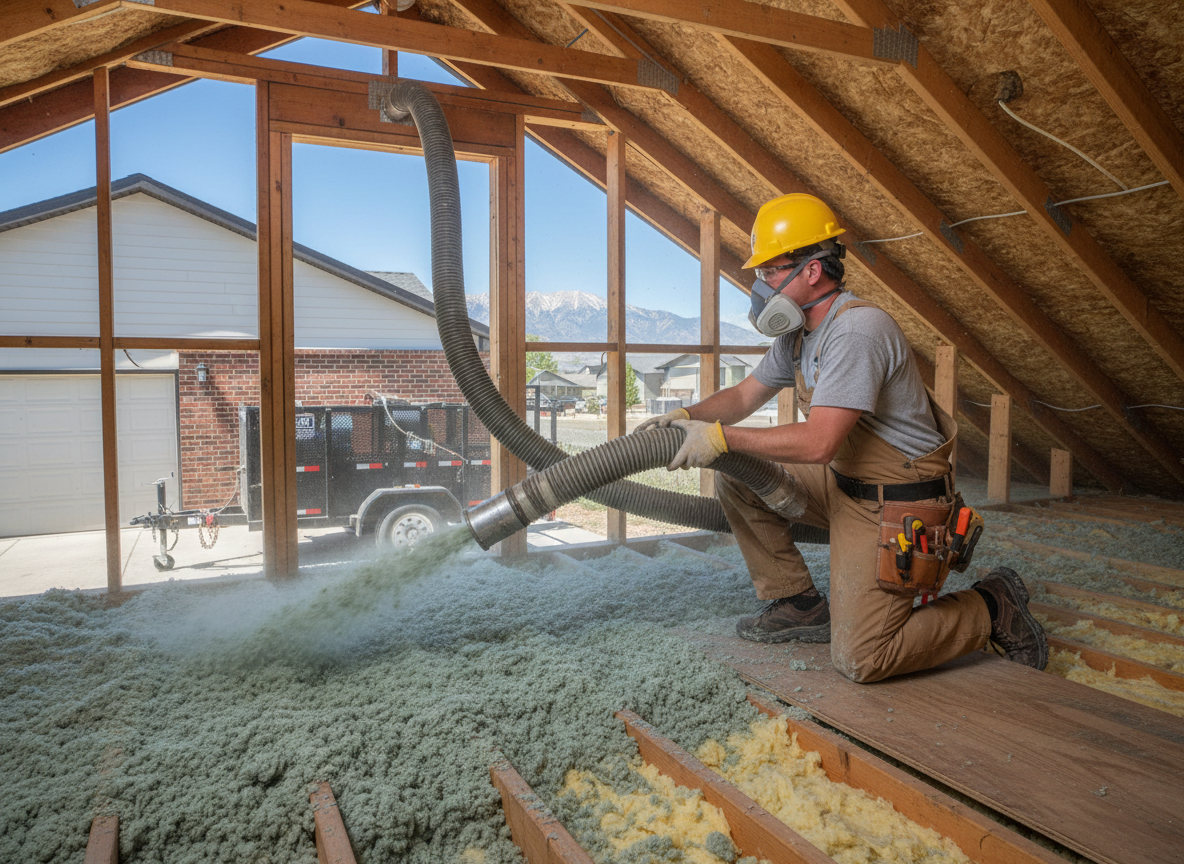
American Fork homes, especially those built before the 1990s in Downtown American Fork and near American Fork City Hall, often have thin or settled fiberglass batts that fail once winter temperatures drop below freezing. Semi-arid summers push attic temperatures over 120 degrees, driving heat back into living spaces and raising cooling loads for residents in North American Fork and the American Fork Canyon area. Proper air sealing at top plates and recessed lights before adding cellulose or blown fiberglass prevents the moisture cycling common in Utah County homes.
Terrain around Timpanogos Cave and the canyon brings stronger winds that push air through ridge vents and gable ends. Homes in South American Fork near Pleasant Grove and Highland frequently show ice dams on north-facing roofs because heat escapes through under-insulated attics. Adding baffles and raising insulation depth to R-49 or higher stops the warm air from melting snow unevenly. Older ranch styles common here also have knee walls and bonus rooms over garages that need separate treatment to avoid cold floors in Lehi commuters' houses.
Code requirements in American Fork call for vapor retarders on the warm side in conditioned spaces and proper ventilation ratios. Skipping these steps in crawl-adjacent attics leads to condensation on roof sheathing during spring thaws. Technicians working from 51 E Main St routinely inspect for knob-and-tube wiring and blocked soffits before any material goes in, because many South American Fork properties still carry original electrical systems from the 1960s and 1970s.
Cellulose settles over time in the dry Utah air, so installers use higher initial densities and leave access points for future top-offs. Homeowners in the American Fork Canyon area also deal with pollen and dust infiltration that standard fiberglass allows through; dense-pack cellulose combined with sealed penetrations reduces that load noticeably during inversion events common in winter.
Technician insight
In American Fork, the thing that catches most people out with home insulation is the combination of 1960s-1970s ranch homes in South American Fork and the dry, windy winters that push settled fiberglass into corners, leaving large cold spots right above the living room.
South American Fork Ranch Attic
Homeowner noticed high winter heating bills and cold floors in a 1972 ranch near South American Fork. Inspection found six inches of settled fiberglass with gaps along the perimeter and blocked soffits from prior roof work. Crew air-sealed top plates, added baffles, and blew cellulose to R-49 while preserving existing ventilation paths. Heating loads dropped and the family reported even temperatures through the next cold snap.
How it works
- 1
Initial Attic Assessment
Walk the attic, measure existing insulation depth, check for moisture, wiring, and ventilation issues specific to American Fork homes.
- 2
Air Sealing
Seal top plates, penetrations, and recessed lights before adding material to stop the wind-driven leaks common near the canyon.
- 3
Baffle and Vent Installation
Install or repair baffles and ensure soffit and ridge ventilation meets code for the semi-arid climate.
- 4
Insulation Placement
Blow or lay material to target R-value while maintaining access for future checks in older South American Fork stock.
- 5
Final Inspection and Documentation
Verify depth, coverage, and ventilation; provide homeowner with photos and maintenance notes.
Pricing
Pricing varies by attic size, existing insulation condition, and access difficulty; upfront quotes provided after inspection.