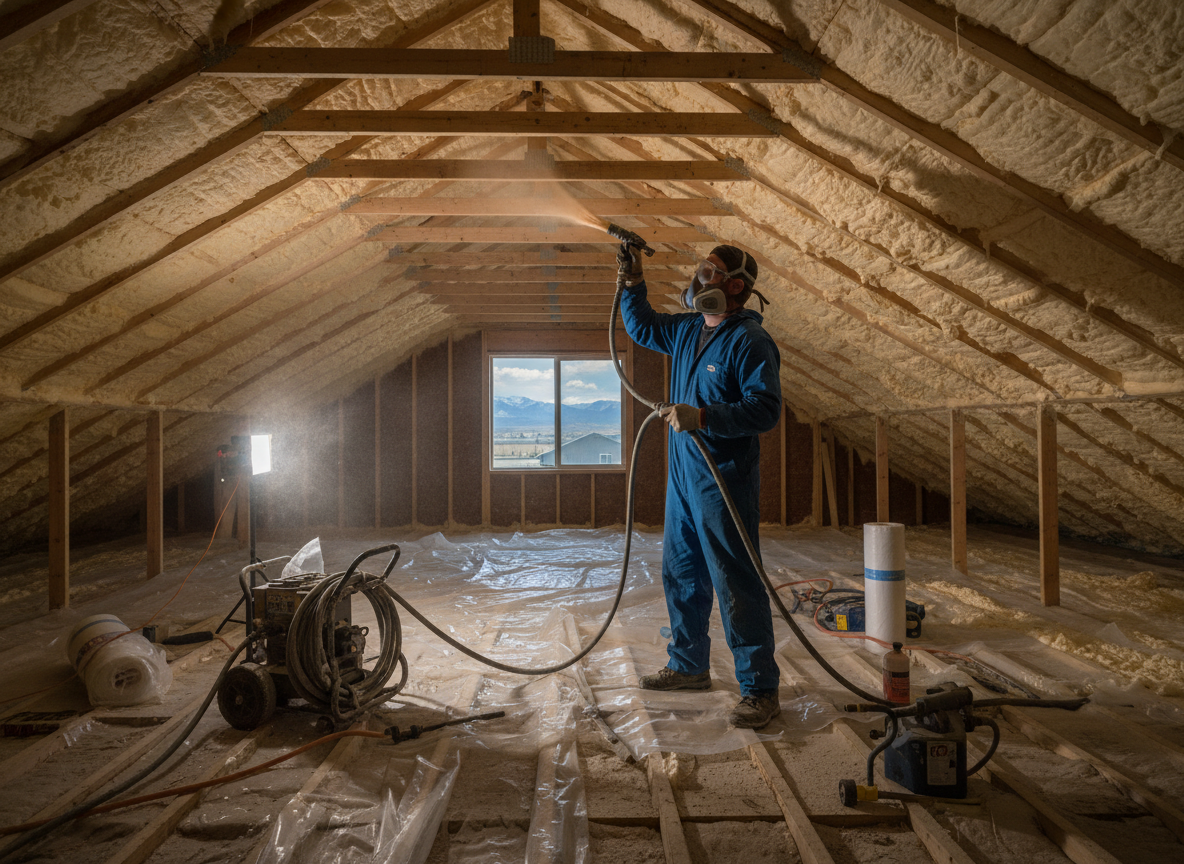
American Fork sits in a semi-arid climate where summer highs push attic temperatures well above outdoor readings and winter lows drop sharply once the sun sets. Homes in Downtown American Fork and North American Fork often date from the 1960s through 1980s with original loose-fill or batt insulation that has settled or compressed, leaving gaps along the ceiling plane. These conditions drive higher heating loads in winter and make cooling systems work harder in summer, especially in single-story ranch styles common near American Fork City Hall.
South American Fork and the American Fork Canyon area bring additional variables. Canyon homes sit at slightly higher elevations with more wind exposure, while properties closer to Timpanogos Cave often have steeper roof pitches and limited attic access. Blown-in cellulose or dense-pack fiberglass can be added over existing material when the attic floor allows, but rim-joist sealing and recessed-light covers become critical to prevent moisture drive during the brief but intense spring thaw. Nearby Lehi and Highland share similar stock, so crews routinely move between these cities on the same day.
Proper attic insulation near me work here starts with confirming ventilation paths remain clear. Ridge and soffit vents in Pleasant Grove tract homes can be blocked by insulation blown too close to the eaves, trapping humidity that later condenses on roof sheathing. We map existing R-values, note any knob-and-tube wiring, and verify that bath and kitchen exhausts terminate outside before adding material. This sequence keeps the job code-compliant without unnecessary removal of older insulation.
Technician insight
In American Fork the thing that catches most people out with insulation near me is how quickly settled cellulose in 1970s Downtown and North American Fork homes leaves cold spots along the north wall once winter temperatures drop; homeowners often add more on top without realizing the old layer has compacted and blocked the original soffit vents.
North American Fork Ranch Home
Problem: homeowner noticed higher winter heating bills after adding blown insulation themselves. What we found: old fiberglass had settled to four inches along the north side, and new material had covered the soffit vents. What we did: removed loose fill, air-sealed top plates, reinstalled ventilation baffles, then blew fresh cellulose to uniform depth. Outcome: even coverage restored and vents remained clear.
How it works
- 1
Attic Assessment
Walk the attic to measure current insulation depth, check for moisture stains, and locate recessed lights or exhaust ducts that need protective covers.
- 2
Material Selection
Choose blown cellulose or fiberglass based on access, existing material type, and whether the home is in wind-exposed canyon terrain or sheltered valley neighborhoods.
- 3
Air Sealing
Seal top plates, penetrations, and recessed fixtures before insulation to stop conditioned air from escaping into the attic space.
- 4
Installation and Final Check
Blow or lay insulation to target R-value, restore ventilation paths, and confirm no material blocks soffit vents before leaving the site.
Pricing
Upfront quotes after on-site inspection; final cost depends on attic access, existing insulation condition, and square footage.