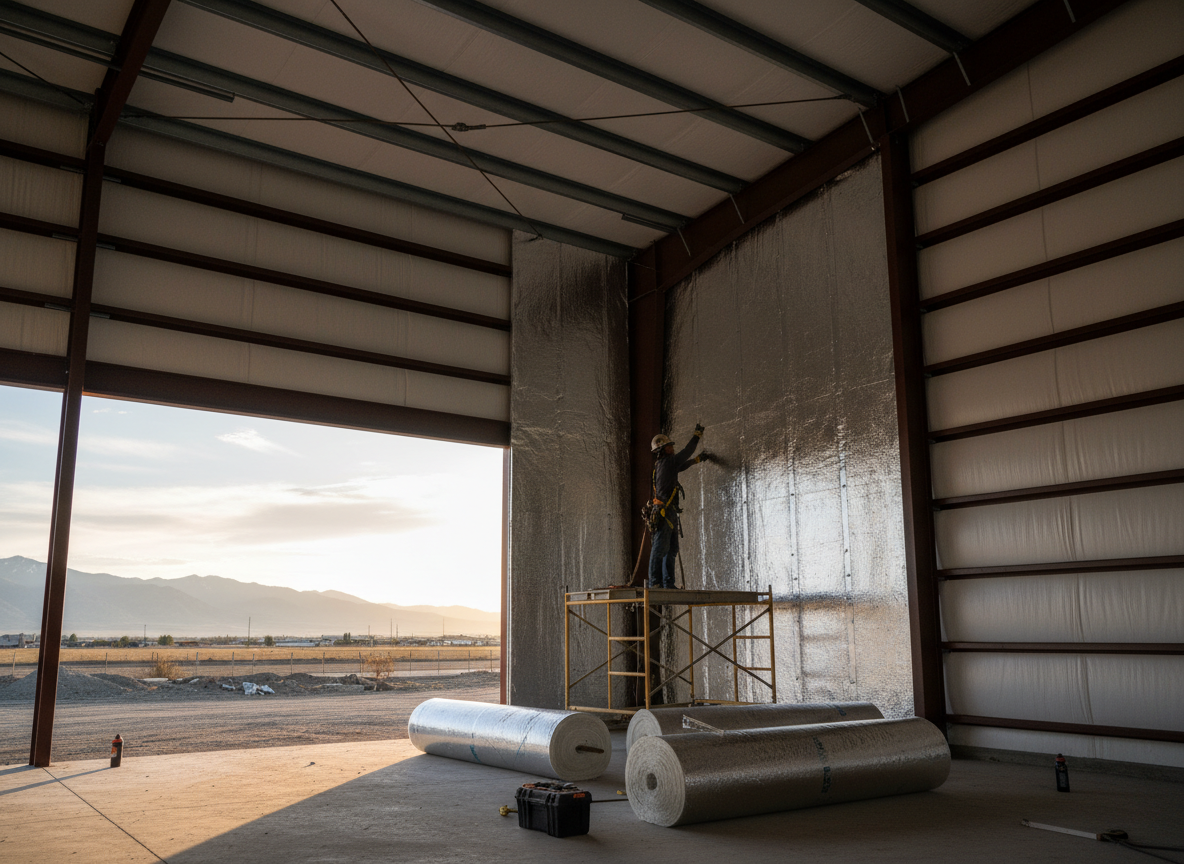
Metal buildings in American Fork face rapid heat gain through roofs during summer peaks and significant heat loss once winter temperatures drop below freezing. Proper insulation requires materials that address both conduction through steel panels and air infiltration common in older structures around American Fork City Hall and Timpanogos Cave access roads. Spray foam or rigid board systems often outperform loose-fill options here because they create a continuous thermal break without sagging on vertical walls exposed to canyon winds.
Local terrain adds complexity. Buildings near American Fork Canyon experience stronger gusts that push moisture under seams, while properties in South American Fork sit on flatter ground with less natural drainage. This means installers must pay extra attention to vapor barriers and seam sealing to prevent condensation inside walls during the shoulder seasons when temperatures swing 30 degrees in a single day.
Code considerations in Utah County also influence choices. Metal buildings converted for storage or light commercial use must meet current energy standards without trapping moisture that could corrode framing over time. Experienced crews check existing panel condition first, then select closed-cell foam or fiberglass batts rated for the expected temperature differential between attic spaces and the exterior.
Homeowners in North American Fork and Pleasant Grove often discover that standard attic methods fail on metal because of thermal bridging at girts and purlins. Addressing these points during installation improves year-round comfort and reduces energy costs without requiring full roof replacement.
Technician insight
In American Fork, the thing that catches most people out with metal building insulation is canyon wind driving moisture under seams on older metal structures in the American Fork Canyon area. Homeowners often skip the vapor barrier step thinking the dry climate protects them, then deal with hidden corrosion once winter sets in.
Metal Shop Near Downtown American Fork
The owner noticed ice forming on interior walls during cold snaps. We found missing insulation at the girts and wind-driven gaps along the north wall facing the canyon. We installed closed-cell foam with sealed seams and added a vapor barrier. The building now maintains steady temperatures without condensation issues.
How it works
- 1
Site Assessment
Inspect metal panels, seams, and existing insulation levels while noting exposure to American Fork Canyon winds and local drainage patterns.
- 2
Material Selection
Choose closed-cell spray foam or rigid boards suited to semi-arid conditions and temperature swings between Highland and Lehi.
- 3
Preparation and Sealing
Clean surfaces, repair gaps, and install vapor barriers to manage moisture from winter snowmelt and summer humidity.
- 4
Installation and Finishing
Apply insulation to walls and roof deck, seal all edges, and verify thermal performance before final walkthrough.
Pricing
Cost depends on building size, access, and chosen material; 24/7 scheduling available from our location at 51 E Main St, American Fork, UT 84003, USA.