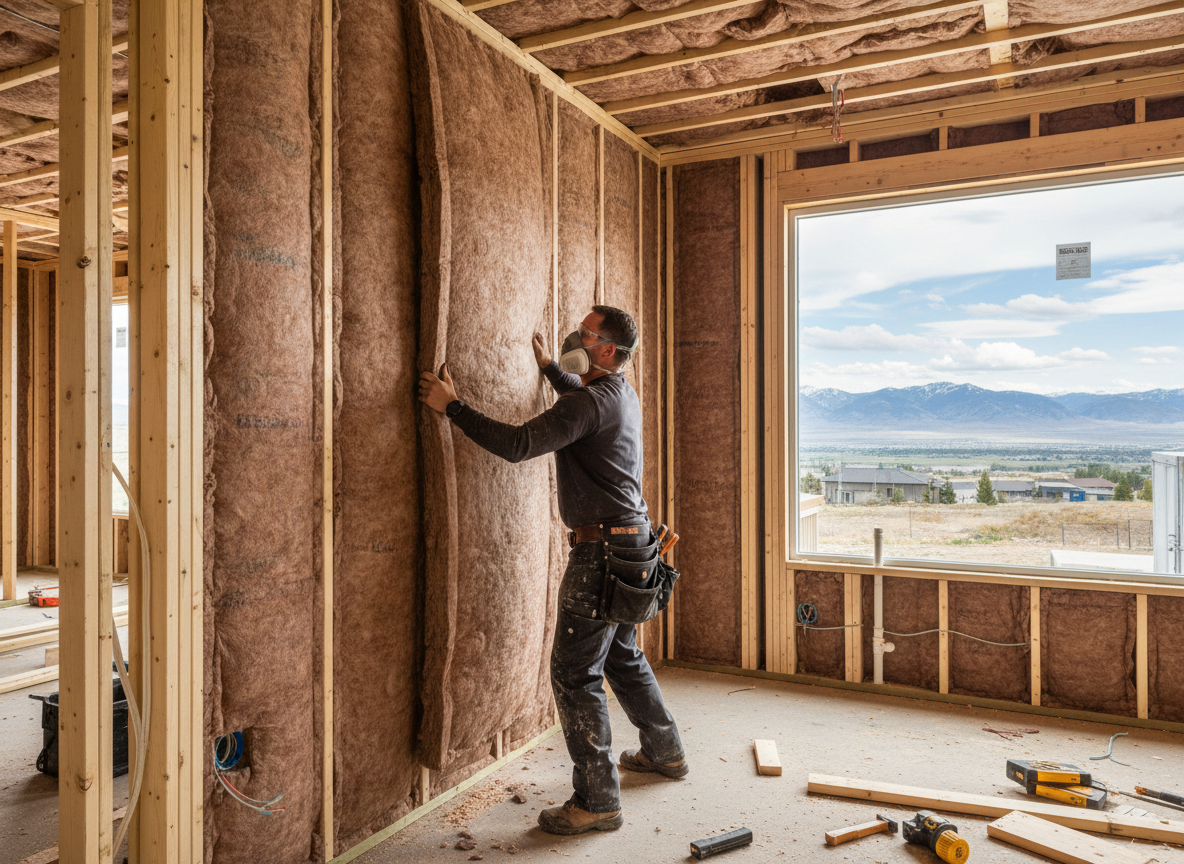
Rockwool insulation performs well in American Fork's semi-arid climate where hot summers push attic temperatures high and cold winters bring sharp drops, especially in homes near American Fork Canyon. The material's stone wool composition resists fire and holds up against occasional moisture from snow melt or condensation better than fiberglass in older stock around Downtown American Fork and North American Fork. Installers must account for varying rafter depths in homes built before the 1980s versus newer builds in South American Fork, ensuring proper baffles to maintain ventilation along the roof deck.
When working in Pleasant Grove or Highland border areas, crews often encounter cellulose that has settled or absorbed humidity, requiring full removal before rockwool batts can be fitted between joists. The dense fibers reduce sound transmission from nearby roads and provide stable R-value even when compressed slightly during installation in tight cathedral ceilings common in canyon-adjacent properties. Proper sealing of penetrations prevents the airflow that otherwise bypasses insulation in Lehi homes with similar rooflines.
Code compliance in Utah County requires meeting current energy standards for attic insulation depth, and rockwool's rigidity helps maintain consistent coverage without sagging over time. Technicians check for knob-and-tube wiring in pre-1960 homes before placing material directly against it. Ventilation paths must stay clear to avoid ice dam formation during winter, a frequent issue in American Fork's freeze-thaw cycles.
Edge cases include low-slope roofs near American Fork City Hall where blown rockwool is preferred for filling irregular cavities without cutting multiple batts. Always verify existing insulation depth first rather than layering over compressed material, which reduces overall performance.
Technician insight
In American Fork the thing that catches most people out with rockwool insulation is underestimating how canyon winds push air through unsealed penetrations in pre-1970 homes near Timpanogos Cave; the dense batts only perform when every bypass is addressed first, otherwise you still feel cold air in South American Fork living spaces during January freezes.
North American Fork Attic Upgrade
Homeowner in North American Fork reported uneven heating despite new furnace. Inspection found settled fiberglass and blocked soffit vents from prior work. Crew removed old material, installed rockwool batts with proper baffles, and sealed can lights. Temperature stayed consistent through the next winter without added energy use.
How it works
- 1
Site Assessment
Inspect attic access, existing insulation, ventilation, and wiring in American Fork homes to determine rockwool suitability.
- 2
Preparation
Remove old material if needed, install baffles, and seal gaps around pipes and lights.
- 3
Material Placement
Fit rockwool batts or blow in loose fill between joists to target depth without blocking airflow.
- 4
Final Check
Verify coverage, ventilation clearance, and access points before closing up.
Pricing
Pricing varies with attic size, existing material condition, and access difficulty in older American Fork neighborhoods.