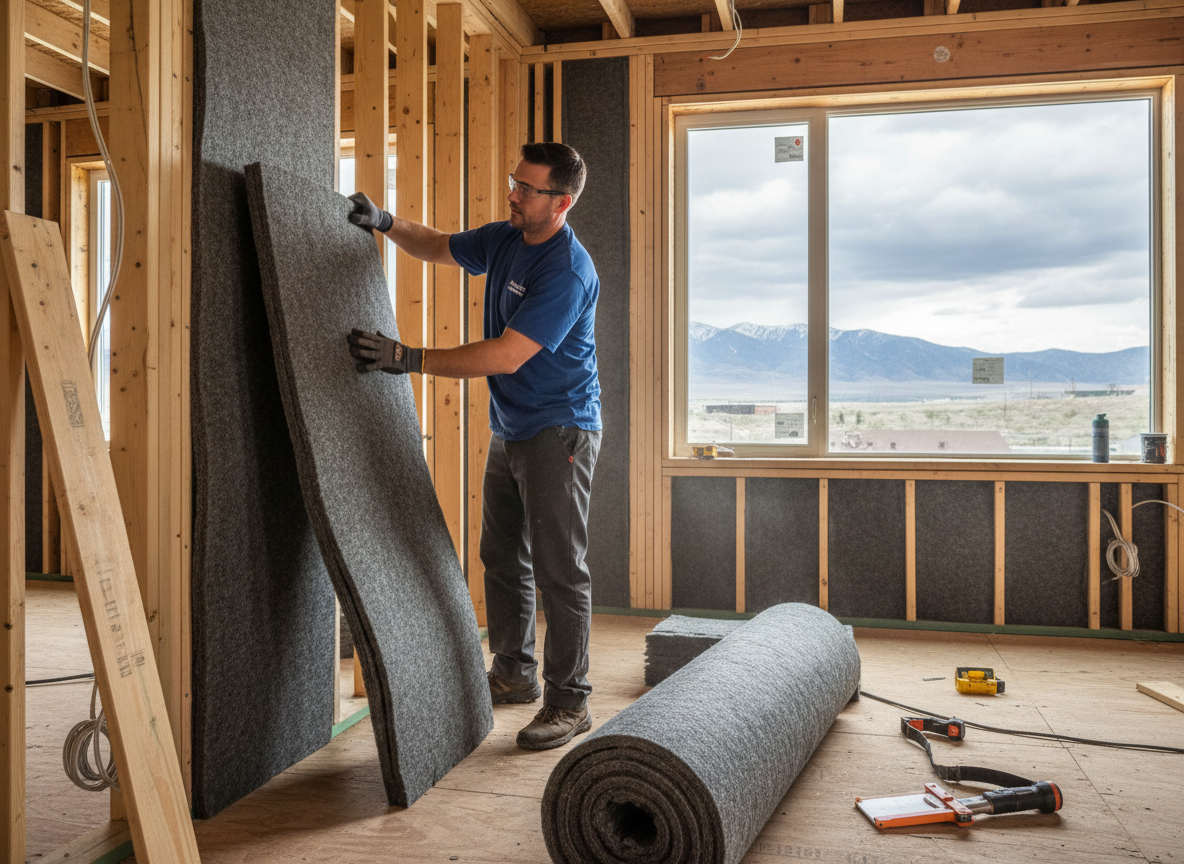
Soundproof insulation in attics here must handle both airborne noise from Highway 92 and the constant low rumble of wind funneled through American Fork Canyon. Dense mineral wool or blown-in cellulose with added mass-loaded vinyl layers works best because it resists settling during the hot, dry summers and stays effective when winter temperatures drop sharply at night. Older homes near Downtown American Fork often have open truss spaces that let sound travel straight into living areas, so sealing every bypass before adding insulation is required to meet Utah energy code air-sealing rules.
Edge cases appear regularly in South American Fork where newer tract homes sit close to the canyon mouth. These houses can experience sudden gusts that carry dust and noise through ridge vents; installing acoustic baffles and dense-pack insulation around those vents prevents both sound leaks and moisture issues during the occasional heavy spring runoff. In North American Fork, ranch-style homes from the 1970s frequently have shallow attics with limited headroom, forcing installers to use rigid sound-deadening boards rather than loose fill to maintain the required STC rating without compressing the material.
Homeowners sometimes confuse soundproofing with standard thermal insulation. Thermal batts alone do little to block low-frequency noise from passing vehicles on I-15 or from Timpanogos Cave tour traffic in summer. Proper soundproof work includes decoupling ceiling joists where possible and adding a second layer of drywall with green glue in finished spaces below, details that only become clear once the attic is opened and inspected.
Noise Sources Specific to American Fork
Canyon winds, commuter traffic on Main Street, and seasonal construction near American Fork City Hall create distinct frequency profiles that change with the seasons. Addressing these requires different material densities than a generic thermal job.
Technician insight
In American Fork, the thing that catches most people out with soundproof insulation is how the cold winter winds coming straight down American Fork Canyon find every unsealed gap in 1970s and 1980s homes near Downtown. Homeowners add batts thinking it will quiet the house, but without first sealing the ridge and soffit areas the noise just travels around the new material.
Canyon Wind Noise in South American Fork
A homeowner near the canyon mouth reported constant low rumble in bedrooms during winter gusts. Inspection showed open soffits and thin fiberglass allowing sound to travel. We sealed all bypasses, installed dense mineral wool with acoustic barriers, and added vent baffles. The owner reported the rooms stayed noticeably quieter through the next cold snap.
How it works
- 1
On-Site Noise Assessment
Walk the attic and main living spaces to identify sound paths from American Fork Canyon winds and nearby roads.
- 2
Air Sealing and Bypass Work
Seal all penetrations and gaps before insulation to stop flanking noise common in older American Fork homes.
- 3
Material Installation
Install dense mineral wool or cellulose with acoustic barriers suited to the semi-arid temperature swings.
- 4
Final Inspection and Testing
Check for gaps and verify noise reduction before closing up the space.
Pricing
Upfront quotes after inspection because attic depth, access, and existing insulation condition vary widely across American Fork neighborhoods.