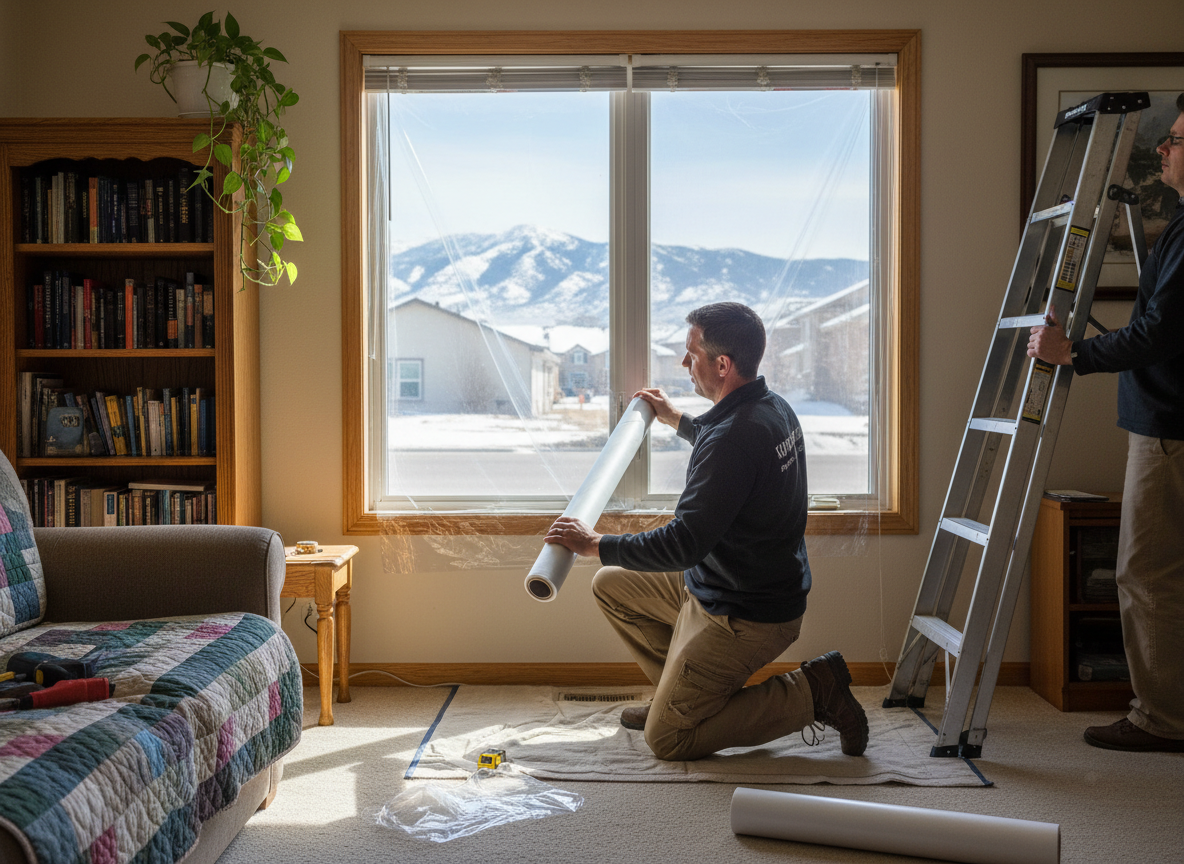
American Fork's older homes in Downtown and South American Fork often feature single-pane windows that leak heat during cold winters and allow excessive solar gain in summer. Window insulation addresses these gaps with weatherstripping, film applications, and insert panels that fit existing frames without full replacement. Local terrain near American Fork Canyon increases wind exposure on north-facing sides, making edge sealing critical to prevent moisture buildup in the semi-arid climate. Proper installation avoids trapping condensation that can damage wood sills common in pre-1980s construction throughout Utah County.
Homes in North American Fork and near Pleasant Grove frequently have aluminum frames that conduct cold, raising heating demands once winter temperatures drop. We evaluate sash condition, glazing type, and surrounding stucco or brick to select compatible materials like low-E films or rigid foam inserts. This approach complements attic work by reducing overall envelope loss without altering historic character near American Fork City Hall or Timpanogos Cave access roads. Code considerations in Utah focus on energy efficiency credits, though we prioritize measurable air sealing over incentives.
Edge cases include bay windows overlooking canyons where uneven settling creates persistent leaks and double-hung units in Highland-adjacent neighborhoods with warped tracks from temperature swings. We test for drafts using smoke pencils before and after, ensuring insulation does not interfere with emergency egress or window operation during fire season.
Technician insight
In American Fork, the thing that catches most people out with window insulation is single-pane aluminum frames in Downtown homes built before the 1970s. Cold canyon winds drive air through warped tracks that standard kits miss, and the temperature swings here make cheap adhesive films peel within two seasons.
Persistent Drafts in South American Fork Residence
A 1960s home near South American Fork showed heavy heat loss through original double-hung windows during winter. Inspection found failed weatherstripping and settling gaps on the north elevation facing open terrain. We installed custom rigid inserts and perimeter seals. The homeowner reported steadier indoor temperatures and lower furnace runtime the following month.
How it works
- 1
Site Assessment
Inspect windows across the home in American Fork, noting frame materials, glazing, and exposure to canyon winds or direct sun.
- 2
Material Selection
Choose films, weatherstripping, or inserts matched to local housing age and climate demands in neighborhoods like North American Fork.
- 3
Installation
Apply treatments to seal gaps while preserving operation, focusing on high-loss areas near American Fork Canyon.
- 4
Verification
Test airflow and comfort improvements on-site before final walkthrough.
Pricing
Costs depend on window count, frame condition, and material type; we provide upfront quotes after assessment at 51 E Main St.